




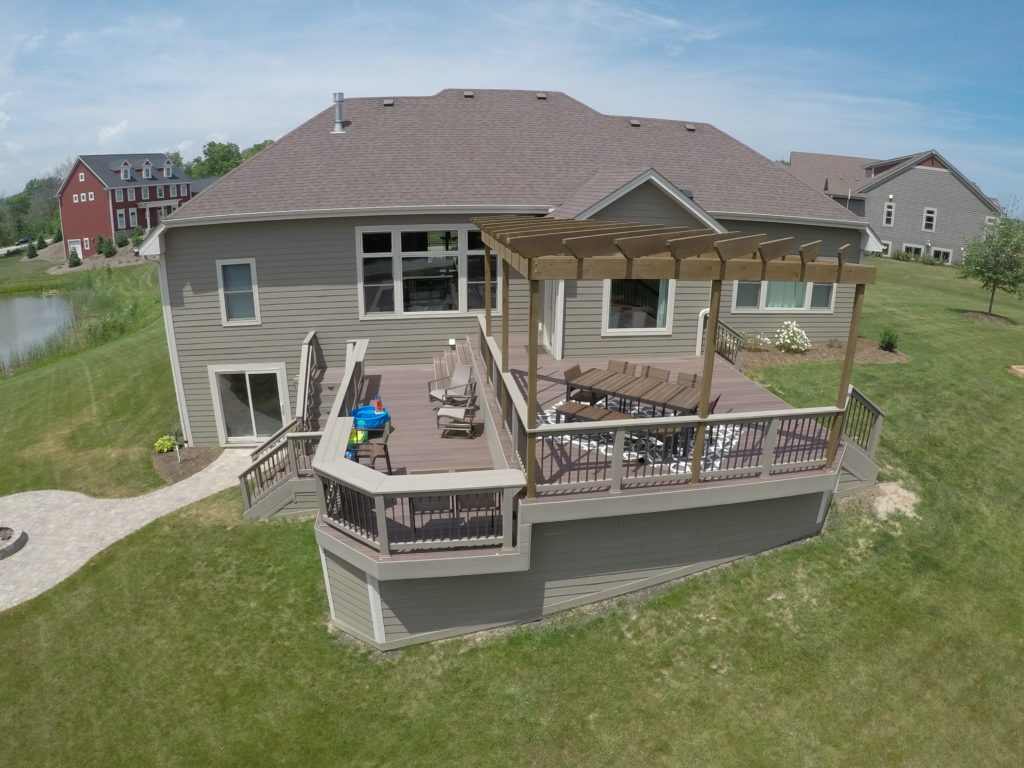
A single-level deck works well for a flat backyard and a simple layout. But when your yard has a slope, your home has multiple access points, or you want to separate entertaining space from a quiet sitting area, a multi-level deck opens up possibilities that a flat platform simply can’t deliver. Planning one well takes more thought than a standard build, and getting the details right from the start saves significant time, money, and frustration down the road.
Here’s what goes into planning a multi-level deck that works for your property, your lifestyle, and Wisconsin’s demanding seasons.
Start With Your Yard’s Topography
The slope and layout of your yard should drive the design of a multi-level deck more than almost any other factor. A yard that drops away from the house is a natural candidate for a multi-level deck, where each tier steps down with the grade rather than fighting it. This approach produces a structure that looks intentional and integrates cleanly with the landscape instead of sitting on top of it like an afterthought.
Before any design decisions get made, a good contractor walks the property, assesses the grade changes, and identifies any drainage concerns, utility lines, or setback requirements that affect where each level can sit. In Franksville, WI, frost depth requirements also factor into how footings are set, which influences the structural planning for every tier of the deck.
Define How You’ll Use Each Level
One of the biggest advantages of a multi-level deck is the ability to create distinct zones for different uses. Before settling on a layout, think carefully about how each level will function on a daily basis.
A common arrangement puts dining and grilling space on the upper level closest to the house, with access directly from the kitchen or living room. A lower level might serve as a lounge area, a space for outdoor furniture and a fire feature, or a transition point to a pool or backyard. Some homeowners use the intermediate level for container gardens, built-in planters, or a hot tub platform. The clearer you are about function before construction begins, the better the final design serves your actual life.
Choose Materials That Handle Wisconsin Weather
A multi-level deck puts more surface area and more structural complexity in contact with the elements. Wisconsin winters are hard on outdoor structures, and Franksville, WI homeowners need materials that hold up through freeze-thaw cycles, heavy snow loads, and humid summers without constant maintenance.
Composite decking from brands like Trex and TimberTech is a strong choice for multi-level deck builds because it resists moisture, doesn’t splinter, and holds its color without annual staining or sealing. Wood remains a popular option for homeowners who prefer a natural look and are committed to the upkeep it requires. PVC decking offers the highest moisture resistance of the three and suits homeowners who want absolute minimum maintenance.
Whatever material goes on the surface, the framing underneath needs to be built for the long term. Pressure-treated lumber is the standard for most framing, with steel and composite framing options available for elevated sections where moisture exposure is a larger concern.
Think About Stairs, Transitions, and Flow
The way people move between levels matters as much as the levels themselves. A multi-level deck with awkward stair placement or transitions that feel disconnected will frustrate everyone who uses it. Well-positioned stairs make the whole structure feel cohesive and intuitive.
Consider where stairs land relative to the yard, whether they face the view or point toward a fence, and how wide they need to be for comfortable traffic during gatherings. Wider stairs with open risers read as more inviting and keep the structure feeling light rather than heavy. Landings between levels, where the grade allows, add both function and visual interest.
Plan Railings and Lighting Early
Railings and lighting are often treated as afterthoughts in the planning phase, but they have a real impact on both safety and aesthetics in a multi-level deck. Railing height requirements in Wisconsin follow state and local building codes, and the style you choose shapes the overall look of the finished structure significantly.
Cable railing preserves views. Composite or aluminum railing requires minimal upkeep. Glass panel railing creates a contemporary, open feel. Each choice works differently depending on the overall design direction and the materials used throughout the build.
Integrated lighting deserves the same early attention. Step lighting, post lighting, and under-rail lighting are all easier and less expensive to wire during construction than to add retroactively. For a multi-level deck used in the evenings, good lighting makes every tier more usable and the whole structure safer after dark.
Get the Permits and Timeline Right
A multi-level deck build in Franksville, WI requires permits, and the timeline for a project of this complexity is longer than a simple platform deck. Plan for design, permitting, material lead times, and construction as sequential steps, not overlapping ones. A realistic project plan from your contractor upfront prevents the frustration of unexpected delays mid-build.
When you’re ready to start planning your multi-level deck, Excel Custom Decks has been building custom outdoor structures across southeastern Wisconsin since 2000. Call us at 414-333-1888 for a free design estimate and let’s talk through what’s possible for your property.